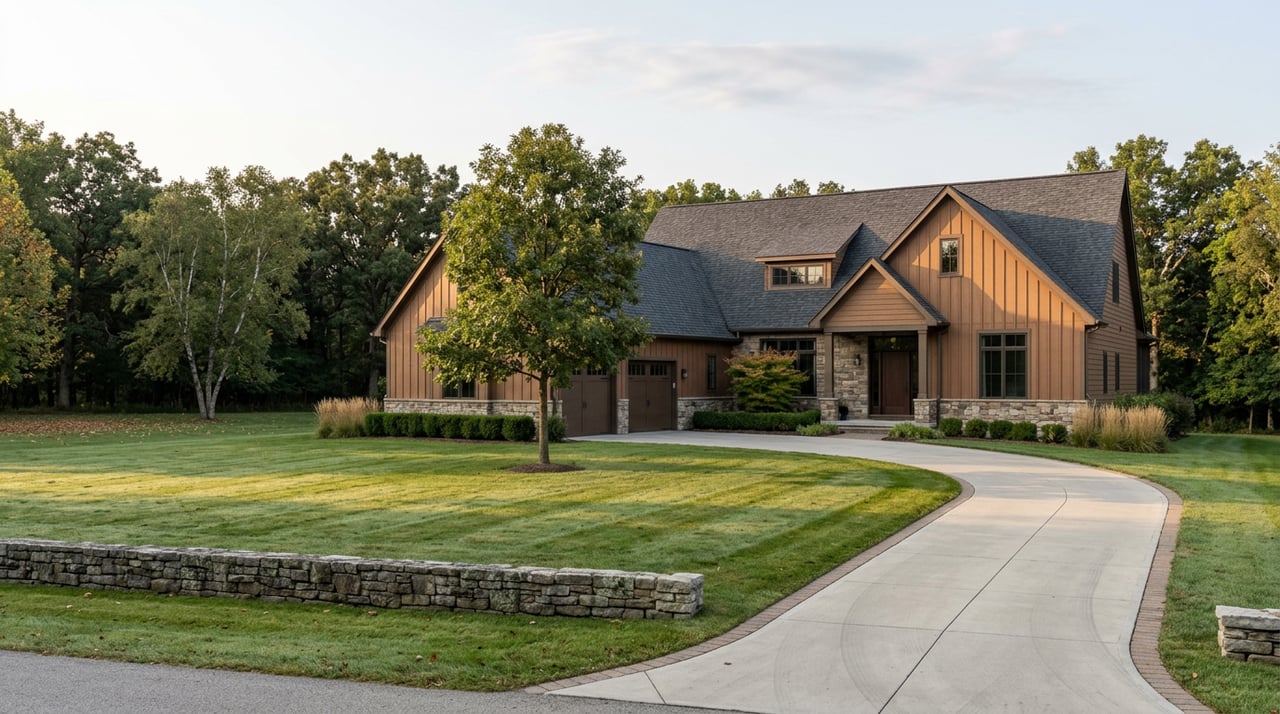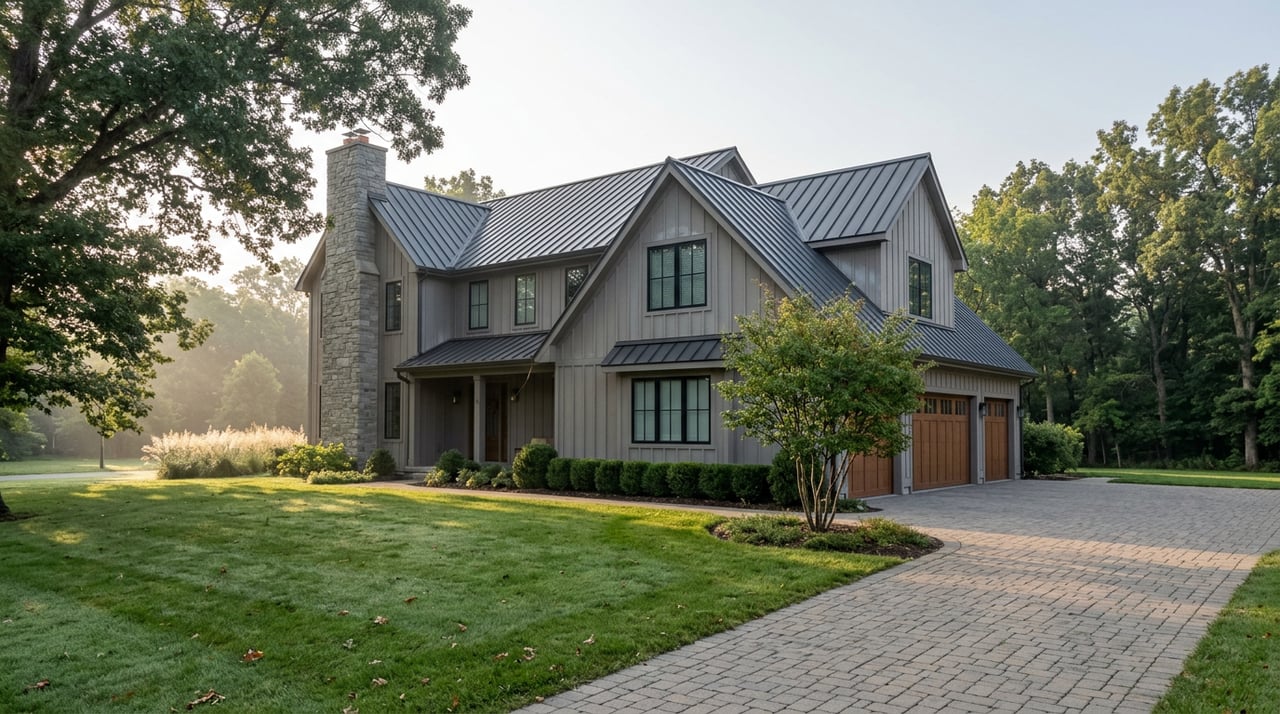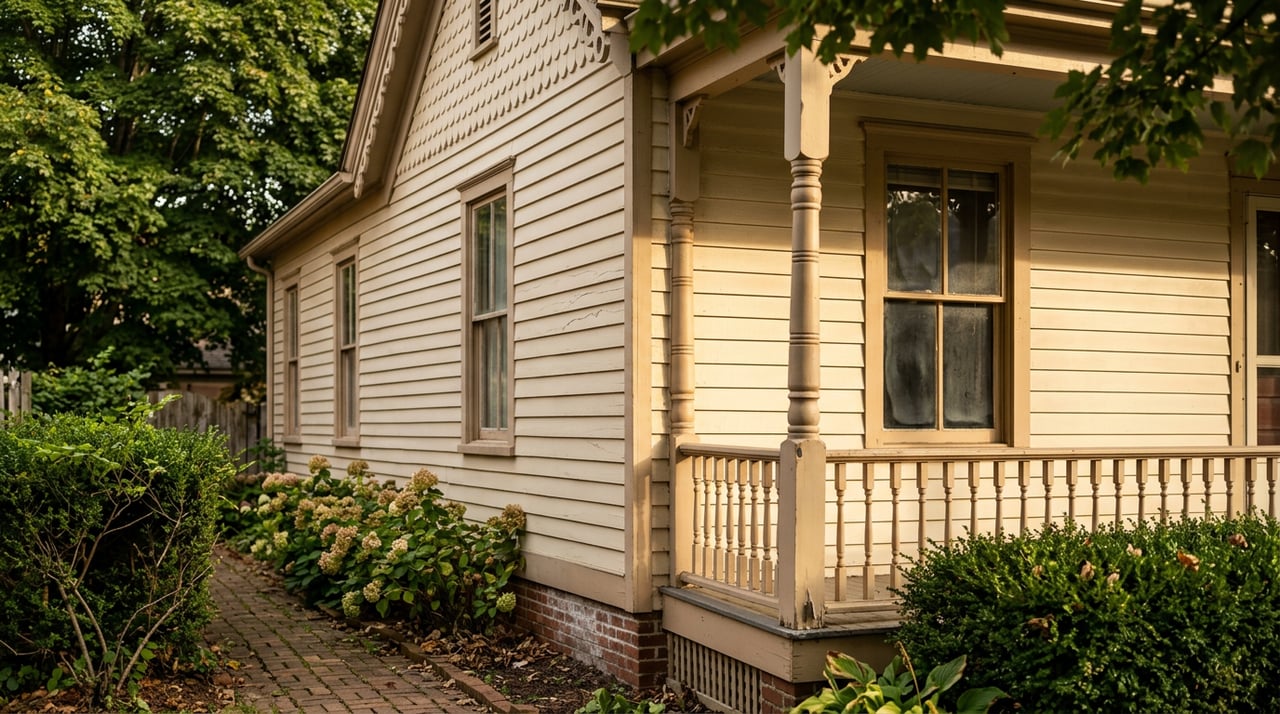
At the Evansville Historic Preservation Commission's March 18, 2026 meeting, four small projects came up for review: a reroof and re-siding job on West Church Street, gutter work on West Liberty Street, a wood fence swap on North Madison Street, and a front door replacement on South First Street. None of these are unusual home projects. Any homeowner in South Central Wisconsin might tackle one of them in a weekend. In Evansville, each one needed a Certificate of Appropriateness before a building permit could even be issued.
Here's the part that trips people up. Evansville does not have one historic district with one set of rules that everyone quietly learns to work around. It has three separately named, separately mapped districts, plus a handful of individually listed landmarks, and the answer to "do I need approval for this" depends on which block you're standing on. A buyer who falls in love with a house on Church Street and assumes the same freedom their cousin has two streets over on a non-designated block is working from the wrong assumption entirely.
Three districts, not one
Evansville's National Register listings break down like this, based on the walking tour materials published by the Evansville Grove Society and the city's own historic preservation records:
| District | General area | Character |
|---|---|---|
| Evansville Historic District (the original) | Main Street from Allen's Creek to South Fourth Street, Church and Liberty Streets from Madison to South Fourth, Garfield Avenue from Madison to North Second | The largest of the three, listed on the National Register in 1978, containing the bulk of the town's roughly 300 historic structures |
| Grove Street Historic District | Grove Street between North First and North Second Streets | A tighter cluster of nine homes built between 1910 and 1946, added to the State Register in 2010 and the National Register in 2011 |
| South First Street Residential Historic District | South First Street from around Highland Avenue south to 443 First Street | A residential run distinct from the commercial core downtown |
Beyond these three, a handful of individual properties carry their own listing, including the Eager Free Public Library, Leonard-Leota Park, St. John's Lutheran Church, and the Evansville Standpipe.
The 1978 listing for the original district makes Evansville's the second-oldest National Register historic district in the state, trailing only Mineral Point. The Wisconsin Historical Society has described the town's collection this way:
"The finest collection of 1840s to 1915 architecture of any small town in Wisconsin."
That reputation is well earned, but it's also exactly why the rules exist and why they apply so specifically. A district boundary that looks like an arbitrary line on a map is, in practice, the difference between a same-week permit and a month of paperwork.
The invisible line: what requires a permit here and nowhere else
This is the part most buyers never think to ask about until they're standing in a hardware store aisle picking out siding. According to the city's own building permits page, homeowners inside the Historic Overlay District need a Certificate of Appropriateness reviewed by the Historic Preservation Commission before a building permit is issued, and they need permits for installing siding, installing windows, and removing original architectural details representative of a style or unique design element. The city states plainly that these particular permit requirements apply only inside the historic overlay districts and nowhere else in Evansville.
In other words, the exact same project, replacing a window, swapping siding, taking out a decorative porch bracket, is a same-day errand on one side of a street and a Commission agenda item on the other. That distinction rarely comes up during a showing. It shows up during a renovation, or worse, during a listing appointment when a seller mentions the "new" windows they installed a few years back and nobody thought to check whether the work was ever approved.
The clock that actually catches people
The Certificate of Appropriateness process runs on its own schedule, separate from a standard building permit. Applications have to be submitted and deemed complete at least 10 days before the Historic Preservation Commission's regular monthly meeting, which falls on the third Wednesday at 6 p.m. at City Hall, 31 S. Madison Street. Depending on the scope of work, a project is cleared either at the staff level or brought before the full Commission at that monthly meeting, the same split visible in the city's own meeting records, which separate routine staff-approved items from the cases the Commission actually discusses and votes on.
Once a project clears that hurdle, standard building permit processing generally takes 3 to 7 business days, according to the city. That's a reasonable timeline on its own. Stack it behind a COA application that has to land 10 days before a meeting that only happens once a month, and a renovation that felt routine can add weeks to a schedule that a buyer built around a closing date or a seller built around a listing date.
What happens when the process gets skipped
This isn't a theoretical risk. City meeting records from 2022 document a compliance issue at 34 North Second Street, where a window was shortened without Commission or staff approval. The matter came back before the Commission as an enforcement discussion rather than a routine sign-off. It's a reminder that historic district rules aren't a formality that only matters if someone happens to notice. Unauthorized work can turn into a compliance case that a future buyer's attorney or lender will eventually ask about.
Why it shows up on the for-sale side too
The historic district designation isn't just a renovation issue. It shows up in how historic properties get marketed. A recent MLS listing for a former church building on West Church Street explicitly noted its location inside the Evansville Historic District as part of the property's identity and appeal. For sellers, that designation can be a genuine selling point, signaling architectural integrity and a maintained streetscape. For buyers, it's a prompt to ask a very specific question before writing an offer: has any exterior work on this house gone through the Commission, and is there a paper trail to prove it?
What to actually do before you buy or renovate here
- Confirm which of the three districts, if any, the property sits in before assuming standard permit timelines apply. Evansville's municipal code places the official boundaries on the city zoning map, so that's the first document to pull.
- If you're planning exterior work, whether it's a new fence, new siding, or window replacement, reach out to the Community Development Director, Colette Spranger, before finalizing contractor bids or a moving timeline. Her office handles COA questions directly at (608) 882-2263 or [email protected].
- Build the 10-day submission window and the monthly meeting cycle into any renovation schedule tied to a closing date, a move-in date, or a listing date.
- If you're buying a historic property, ask directly whether any past exterior changes, windows, siding, roofing, fencing, ever received a Certificate of Appropriateness. A missing paper trail is a conversation worth having before closing, not after.
A few questions that come up often
Does this only apply to major renovations, or small repairs too? It applies to specific categories of exterior work, including siding, windows, and removal of original architectural details, regardless of how small the job feels. A straightforward reroof or gutter replacement, like the ones reviewed in March 2026, still goes through the process.
What if my house is individually listed rather than inside one of the three districts? Individually listed landmarks, such as those associated with the Eager Free Public Library or St. John's Lutheran Church, follow their own review requirements tied to their specific designation rather than the district boundaries described above.
Does interior work require the same review? The Certificate of Appropriateness process, as described in city code, centers on the exterior appearance of a structure. Interior changes generally fall outside this specific review, though any work still needs to meet standard building code requirements.
Who do I actually talk to before starting a project? The city's Community Development Director, Colette Spranger, is the direct point of contact for COA questions, applications, and timeline planning.
If you're weighing a historic home in Evansville, whether you're the one buying it or the one getting ready to sell it, these are exactly the kind of details that are easy to miss on a first walkthrough and expensive to discover later. Ashley Nelson has spent years working through South Central Wisconsin's historic properties, insurance-and-claims background included, and can walk you through what a specific address actually requires before you commit to a timeline. Let's Connect.