A buyer under contract on a cul-de-sac lot in the Vineyard subdivision out in Harmony Township assumes the home inspection is the finish line. It isn't. If that property sits outside Milton's municipal water and sewer lines, which a meaningful share of the acreage and rural listings around town do, there is a second inspection waiting, one that runs on different rules, a different clock, and a much smaller list of people licensed to perform it.
Most buyers find this out midway through their contingency period, when someone mentions the well test can't be scheduled for two weeks. Most sellers find it out when a county notice arrives with a due date they didn't know existed. Neither surprise is fatal, but both are avoidable, and understanding why they happen changes how a rural Milton-area transaction should be timed from the day an offer is written.
A Home Inspection Doesn't Touch the Well or the Septic System
IBuyer.com notes that Wisconsin does not require a general home inspection to close on a house. Most buyers order one anyway, and it covers the roof, the foundation, the electrical panel, the furnace, the things a licensed home inspector is trained and certified to evaluate. What it does not cover, in any meaningful way, is a private well or a septic system. Those are specialized mechanical and biological systems, and the person who checks your attic insulation is not qualified to test your well's pumping capacity or open your septic tank to measure sludge depth.
For homes on municipal water and sewer, this distinction rarely matters. For a property in the Ridges of Rock County, out toward Red Hawk Farms, or on one of the larger parcels scattered through Harmony Township, it matters immediately. There is no utility bill and no municipal crew to call if something goes wrong. There is only the system, and whoever inspects it before closing.
The Licensing Rule Most Buyers Never Hear About
Here is the detail that catches people off guard. Wisconsin law does not allow just any inspector, or even a licensed plumber, to perform a well evaluation as part of a real estate sale. JRS Inspections says only an individually DNR-licensed well pump installer or driller can conduct that inspection and issue the report a lender or title company will accept. General home inspectors cannot do it. Master plumbers, despite their broader license, cannot do it either.
JRS Inspections says that rule has been in place since 2008, and it is not a formality, it is a genuine bottleneck. Wisconsin has a far smaller pool of licensed well and pump professionals than it has licensed home inspectors, and in a rural market where a large share of listings depend on private wells, demand for those specialists concentrates during the same spring and summer months when most closings happen. A buyer who waits until the last week of their inspection contingency to book this test may find the earliest available appointment falls after their deadline, which forces an extension, a waiver, or a renegotiation nobody wanted.
The practical fix is simple: schedule the well and septic evaluation the same week the offer is accepted, not the same week the home inspection report comes back.
Rock County Runs Its Own Clock, Separate From Your Closing Date
The point-of-sale inspection a buyer orders is not the same thing as the routine maintenance inspection Rock County requires of every septic system in the county. Rock County Public Health mandates that every private onsite wastewater treatment system, known statewide as a POWTS, be inspected by a certified professional at least once every three years, with pumping required if the combined sludge and scum volume reaches a third of the tank's capacity. The county mails a reminder thirty to sixty days before each property's three-year deadline, regardless of whether that property is for sale.
That timing has nothing to do with a purchase contract, which means it is entirely possible for a seller's routine maintenance notice to land in the mailbox in the middle of a sale, or for a buyer to inherit a system that will come due for its next mandatory inspection within a year of closing. Neither situation should stall a deal, but both are worth knowing about before an offer goes in, because a septic system's maintenance history is a fair question to raise during negotiation, not a surprise to discover afterward.
The state framework behind all of this is Wisconsin Administrative Code SPS 383, maintained by the Wisconsin Department of Safety and Professional Services, which sets the design and setback standards every POWTS in the state must meet, including keeping tank and drainfield components a minimum distance from any private well. County health departments like Rock County's enforce that code locally.
What the Numbers Actually Protect Against
The inspection fees themselves are modest. A septic evaluation performed specifically for a real estate transaction typically runs $300 to $650, and a well inspection with water testing typically runs $250 to $550, often discounted when both are booked in the same visit. A standard general home inspection in Wisconsin typically runs $325 to $450, though the figure moves with the size and age of the house.
| Inspection type | Typical cost | What it checks |
|---|---|---|
| General home inspection | $325 to $450 | Structure, roof, electrical, HVAC |
| Point-of-sale septic inspection | $300 to $650 | Tank, drainfield, sludge and scum levels |
| Real estate well inspection | $250 to $550 | Pump output, pressure, water quality |
The number that actually matters is the one on the other side of a failed inspection. A septic system found non-compliant, whether from age, undersized capacity, or damaged drainfield soil, becomes a negotiation point. Repair or replacement work is priced in the thousands, not the hundreds. Depending on the contract terms, the parties can decide how to address that cost before closing. A few hundred dollars to inspect versus the possibility of a much larger expense is the whole reason this inspection deserves the same seriousness as the general home inspection, not less.
Why This Matters Specifically for Milton-Area Acreage
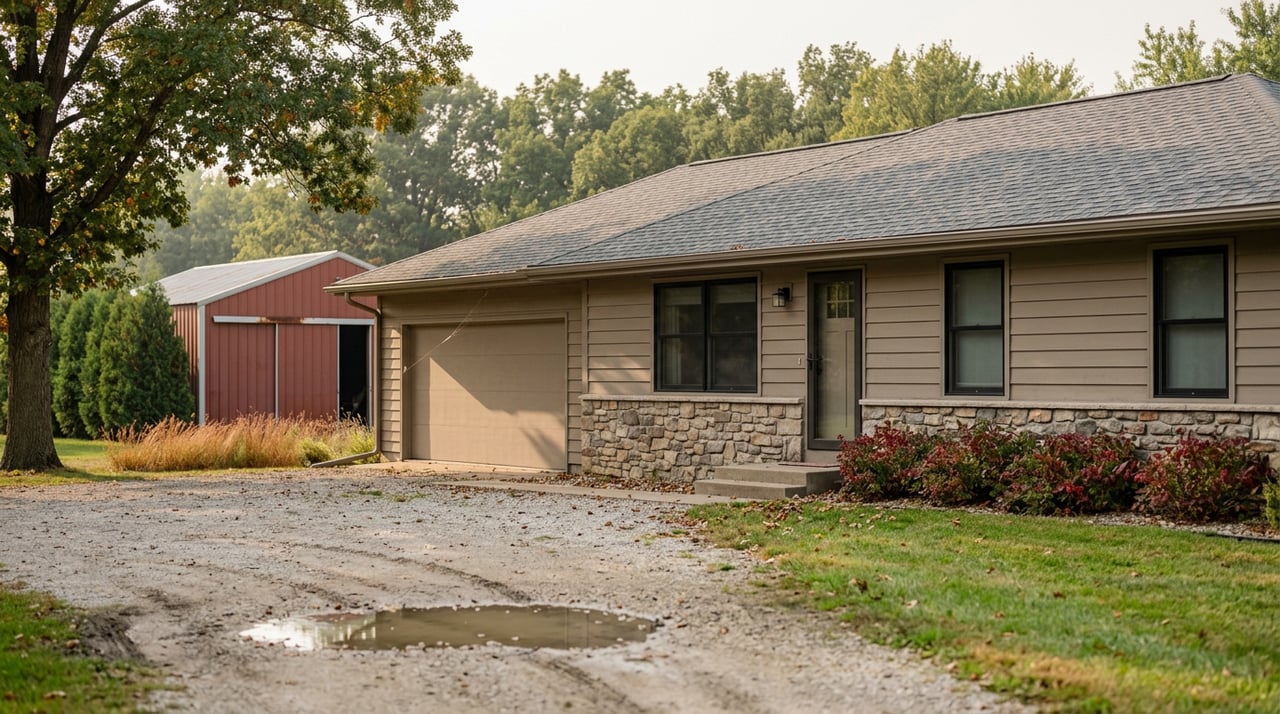
Milton's in-town lots mostly sit on municipal service, but step outside city limits and the math changes. As of early August 2026, rural land and acreage parcels near Milton list in the range of roughly $508,000 to $770,000 depending on size and improvements, with bare land trading between about $73,000 and $92,000 an acre. Buyers drawn to that kind of space, a walk-out ranch on two acres, a cul-de-sac lot with ten acres attached, a newer build in one of Harmony Township's subdivisions, are buying into private well and septic responsibility whether or not it comes up during a showing.
For sellers, the practical move is to order the well and septic inspection before listing, the same way seller-side preparation already covers staging and repairs. A clean report becomes a selling point. A report that surfaces an issue becomes something to address, or price around, on the seller's terms rather than a buyer's.
Three Questions Worth Asking Before You're Under Contract
How do I know if a property has a well and septic system instead of municipal service? It shows up in the listing details and property disclosure, and a licensed real estate agent can confirm it early, before an offer is drafted, so the right inspections get scheduled from day one.
Who typically pays for these inspections? Wisconsin convention has the buyer arranging and paying for inspection-contingency items, including well and septic testing, though this is a term that can be negotiated in the purchase agreement like any other.
What happens if the septic system fails its inspection? It becomes a negotiation point. Depending on the contract terms, the seller may repair it before closing, credit the buyer for the cost, or the parties may agree to a price adjustment. What it should never become is a surprise discovered after the deal has already closed.
A well and septic system is easy to overlook because it is invisible day to day. It only becomes visible the moment it needs attention, and by then the cost of ignoring it has usually grown. Getting ahead of that timeline, on either side of the transaction, is less about paperwork and more about protecting the investment before it becomes a problem.
If you're weighing a purchase or a sale on a well-and-septic property in the Milton area and want a clear read on what to schedule and when, Ashley Nelson has walked this process with rural and acreage clients across South Central Wisconsin. Let's Connect.
This article is general information, not legal, tax or financial advice. Consult a qualified professional about your situation.